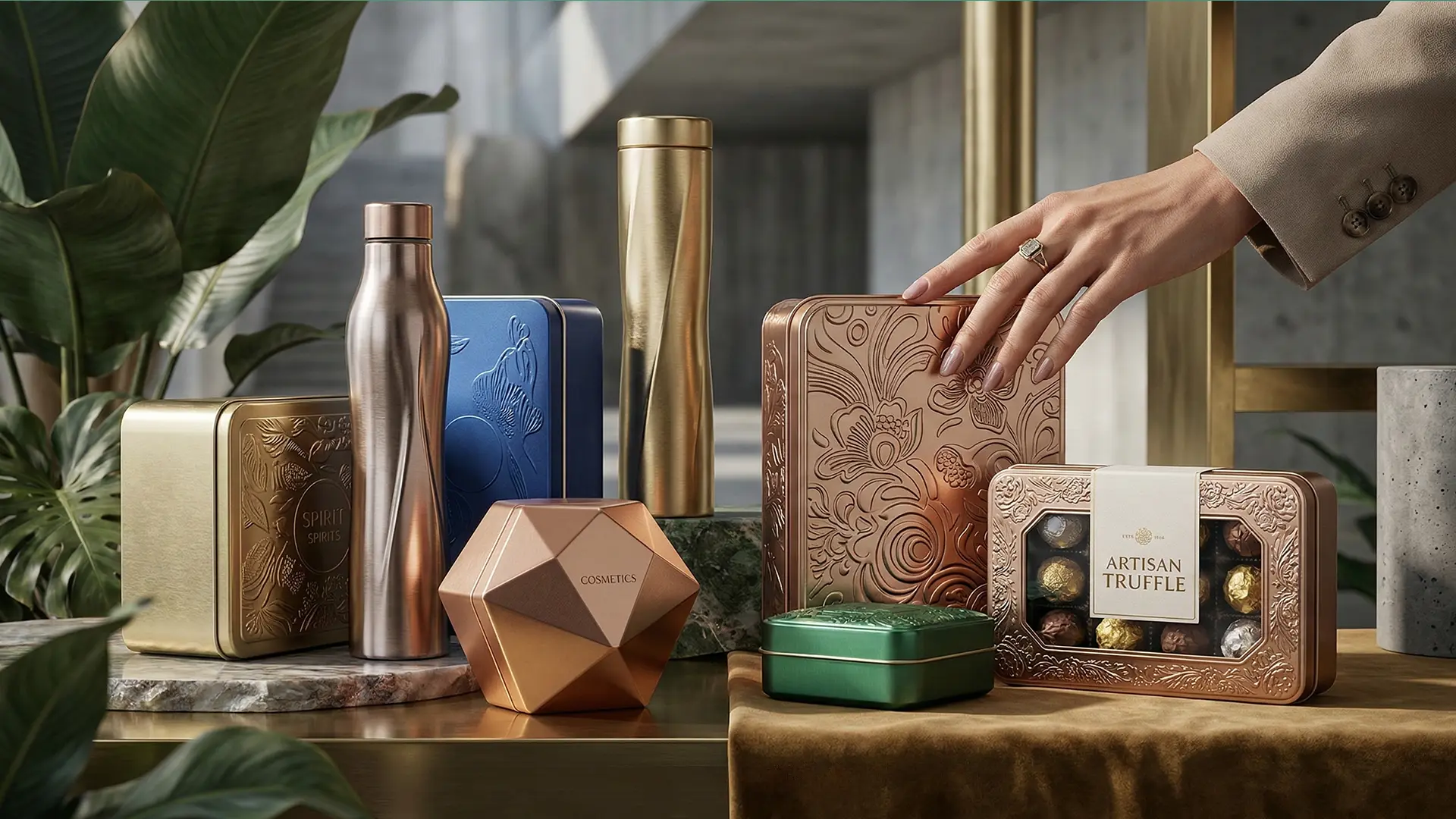
How Much Does Custom Luxury Packaging Design Cost? A Complete Guide for 2026
It is one of the first questions every brand asks — and one of the hardest to answer without context. Custom luxury packaging design costs vary enormously depending on what you are actually buying: a graphic design service, a structural engineering project, a production run of physical units, or a complete end-to-end packaging programme from concept to doorstep delivery.
This guide breaks down every cost component in honest, practical terms — including the real-world timeline from first brief to physical stock in your warehouse. So you can budget accurately, ask the right questions, and understand exactly what you are paying for at every stage.
Why Luxury Packaging Costs More Than Standard Packaging
Before discussing numbers, it is worth understanding why premium packaging commands a premium price.
Standard packaging is optimised for minimum cost per unit. It uses stock structures, standard board weights, and process printing. The result is functional, predictable, and interchangeable. For commodity products, this is entirely appropriate.
Luxury packaging is optimised for brand experience. It uses custom structures, premium materials, specialist surface treatments, and precision engineering. The result is distinctive, sensory, and memorable. For premium products, this investment is not optional — it is the primary vehicle through which quality is communicated before the product is even seen.
Research consistently shows that 72% of consumers say packaging influences their purchase decisions, and 60% have bought a product based solely on its packaging. For luxury brands, packaging is not an accessory expense — it is a revenue-generating asset.
The Two Cost Components You Need to Understand
Luxury packaging has two distinct cost components that are frequently confused:
1. Design and development cost — the fee paid to the design studio for the creative, strategic, and engineering work.
2. Production cost — the per-unit manufacturing cost, tooling, and logistics.
Both are significant. Both are influenced by different factors. And understanding the difference is essential for budgeting accurately — and for avoiding the most common mistake brands make: treating them as a single blurred number.
How the Process Actually Works — Stage by Stage
Understanding costs requires understanding the process. At NASS Studio, a custom luxury metal packaging project moves through four defined stages, each with its own investment and deliverable.
Stage 1 — Strategy, Concept & 3D Visualisation (~$500)
This is where everything begins. After an initial briefing, we develop the strategic direction, structural concept, and a fully rendered 3D visualisation of the proposed packaging. You see exactly what the finished piece will look like — shape, finish, surface treatment, proportions — before any commitment to production.
This stage costs around $500 and is designed to answer one question: does this concept match your vision? It is deliberately accessible because we believe you should see what you are buying before you buy it.
Stage 2 — Pre-Production Samples (~$1,000)
Once the concept is approved and a project agreement is signed, we commission physical pre-production samples from the manufacturing facility. These are real, manufactured samples — not mock-ups — built to the agreed specification.
This stage costs around $1,000 and covers the engineering translation from digital 3D to physical form: tooling configuration, material testing, and the first physical proof of the design. You review the samples, request any adjustments, and sign off before volume production begins.
Stage 3 — Production Agreement & Manufacturing (~30 days production)
With samples approved, you confirm the quantity, unit specification, and delivery timeline. Manufacturing of premium metal packaging typically takes 30 days from production sign-off for standard volumes.
This is when per-unit cost, tooling investment, and surface finishing are fully costed and confirmed. The production agreement locks the specification — no surprises at the end.
Stage 4 — Shipping & Delivery (~60 to 90 days)
All of NASS Studio’s production takes place in China, working with certified manufacturing partners who meet international quality and ethical standards. After production, finished units are shipped to your specified destination.
Sea freight from China to European ports typically takes 60 to 90 days, depending on routing and destination. This is the single biggest timeline variable that brands underestimate when planning a packaging launch.
Total realistic timeline from first brief to stock in warehouse: 4 to 6 months. Plan accordingly — and plan early.
Design Costs: What Are You Actually Paying For?
Beyond the project stages above, broader design costs depend on the scope of creative and strategic work involved. The packaging market broadly divides into four tiers.
Entry level ($500 – $2,000) A designer who executes your brief. You specify what you want, they produce it. No strategic input, no structural engineering, no production management. Appropriate for simple graphic refreshes on standard stock structures. At this level, you are buying execution — not expertise.
Mid range ($3,000 – $6,000) A more experienced designer or small studio. Better craft, more refinement, some creative direction. Still primarily execution rather than strategy. This is the range where many brands get burned — the work looks professional enough that you do not immediately know something is wrong, but the strategic and technical foundation is often missing. The packaging looks good in Photoshop but creates problems in production.
Premium specialist studio ($8,000 – $15,000) Where packaging stops being decoration and starts being a strategic sales tool. At this level, a specialist studio includes brand strategy, consumer insight, structural concept development, multiple design directions, 3D visualisation, production specifications, and manufacturing management. This is NASS Studio’s core operating range for single-product projects.
Bespoke luxury programme ($15,000 – $50,000+) Full end-to-end programme for complex projects: new brand identity expressed through packaging, collector’s edition design, multi-SKU systems, or packaging that requires custom tooling, new structural forms, or complex material engineering. This is the investment level for brands where packaging is genuinely central to product value — luxury spirits, high jewellery, prestige cosmetics.
What Drives Design Costs Up
Several factors push packaging design costs toward the higher end of any range:
Structural complexity. A custom tin shape requires engineering work that a standard rectangular form does not. Custom closures, sliding mechanisms, nested sets, and hinged lids all add engineering time and tooling cost.
Number of SKUs. A single hero product is one design project. A full product range with multiple variants, size options, and seasonal editions is a programme requiring systematic thinking and coordinated execution.
Material and finish specification. Specifying premium surface treatments — embossing depths, lacquer formulations, coating compatibility — requires deep supplier knowledge and technical expertise that goes well beyond graphic design.
Production management. A studio that manages the manufacturing process end-to-end — briefing factory partners, reviewing pre-production samples, approving lithography proofs, overseeing quality control — adds significant value and significant time. It also removes significant risk.
Regulatory compliance. For products sold in EU markets, packaging must comply with PPWR requirements, labelling regulations, and category-specific rules. Building compliance into the design process is far less expensive than retrofitting it after production.
Production Costs: What Does the Physical Packaging Cost?
For premium metal packaging produced in China, production costs depend on five variables.
1. Material and Structure
Standard rigid boxes range from $4 to $9 per unit. Luxury boxes with magnetic closures or two-piece construction range from $12 to $25 or more.
Premium metal packaging — custom embossed tins, collector’s edition canisters, bespoke metal boxes — typically falls in the range of $8 to $35+ per unit depending on complexity. Bespoke collector’s pieces for spirits and perfumery can exceed $50 per unit at lower volumes.
2. Order Quantity
Quantity is the single biggest driver of per-unit cost. A 10,000-unit order can deliver per-unit costs that are 50 to 65% lower than a 500-unit run.
Typical minimum order quantities for premium metal packaging:
| Type | MOQ |
|---|---|
| Standard metal tins (stock structures) | 500 – 1,000 units |
| Custom embossed metal packaging | 5,000 – 10,000 units |
| Fully bespoke collector’s edition designs | 20,000 – 200,000 units |
Brands launching new products should budget for higher per-unit costs on initial runs, with a clear plan to scale volume as the product proves itself.
3. Surface Treatments and Finishing
Surface treatments dramatically affect both the consumer experience and the unit cost.
Embossing and debossing — three-dimensional relief pressed into the metal surface. One of the most powerful luxury signals available in metal packaging, and typically one of the most cost-effective in terms of perceived value per euro spent.
Lacquer and coating — matte, gloss, soft-touch, textured, or metallic finishes applied via lithographic printing. Each carries different cost implications and different aesthetic effects.
Specialty inks — metallic inks, UV-reactive finishes, and colour-shift coatings add visual complexity at meaningful additional cost.
Spot treatments — selective matte/gloss contrasts, partial foiling, or zone-specific textures create premium visual depth. More complex to specify and produce, but highly distinctive at retail.
4. Tooling and Setup Costs
Custom metal packaging requires tooling — the physical dies, forming moulds, and embossing plates used in production. These are one-time costs: subsequent runs of the same design do not pay them again.
For premium metal packaging, tooling costs typically range from $2,000 to $15,000 depending on structural complexity. This is a fixed cost regardless of quantity, which is why higher initial volumes are more economical — the tooling cost is amortised across more units.
Note: flexographic printing setup fees — common in paper and carton packaging — do not apply to metal packaging produced via lithography. The relevant cost for metal is lithographic plate preparation, which is included within tooling estimates.
5. Real-World Lead Times
This is where many brands make the most expensive mistake — underestimating the timeline.
| Stage | Realistic Duration |
|---|---|
| Strategy, concept & 3D visualisation | 2 – 4 weeks |
| Pre-production samples | 3 – 5 weeks |
| Production (after sample approval) | 4 weeks (approximately 30 days) |
| Sea freight: China to Europe | 8 – 13 weeks (60 – 90 days) |
| Total: brief to warehouse | 17 – 26 weeks (4 – 6 months) |
Rush production and air freight are possible but add meaningful cost. Planning a packaging launch without a 4–6 month lead time is a risk that consistently results in either delayed launches or expensive emergency logistics.
How to Budget for Luxury Packaging: A Practical Framework
The question „how much does luxury packaging cost?” is less useful than „how much should luxury packaging cost for my product?”
For premium or luxury products, packaging typically accounts for 15% to 40% of total product cost because it contributes directly to perceived value and justifiable retail price. A $100 premium product may reasonably justify $12 to $25 in packaging cost per unit.
A more strategic framework: keep total design and development spend around 10 to 20% of the expected incremental gross margin in Year 1. If better packaging could add $200,000 in profit, a $20,000 to $40,000 design and development budget is commercially rational.
For brands investing in premium metal packaging for the first time, a realistic total budget framework looks like this:
| Project Component | Typical Range |
|---|---|
| 3D concept and pre-production samples | $1,500 (fixed entry point) |
| Full design and development programme | $8,000 – $25,000 |
| Tooling and setup (one-time, amortised) | $2,000 – $15,000 |
| First production run (unit cost × MOQ) | $8,000 – $50,000+ |
| Sea freight and logistics | $1,500 – $6,000 |
| Total first-project investment | ~$21,000 – $96,000+ |
This range is wide because projects vary enormously. A single premium tin for an artisan spirits brand at 2,000 units sits at the lower end. A full collector’s edition programme for a luxury cosmetics house with multiple SKUs and bespoke tooling sits at the higher end.
Why Premium Packaging Is Not a Cost — It Is a Return
The cost question should always be answered alongside the return question. Premium metal packaging delivers measurable returns through several mechanisms:
Price justification. Consumers perceive significantly higher value in premium packaging and are willing to pay for it. A product in a beautifully engineered tin commands a higher retail price than the same product in standard packaging — typically by a margin that far exceeds the packaging cost differential.
Retention and repeat purchase. Consumers who keep luxury packaging become long-term brand ambassadors. A tin on a kitchen shelf or dressing table delivers brand impressions every day for years — at zero ongoing cost. Few advertising channels offer that return profile.
Retail placement and buyer confidence. Premium packaging improves shelf placement, point-of-sale visibility, and buyer confidence in a brand’s positioning. The indirect commercial benefit of better retail presence is difficult to quantify but consistently significant.
Organic social amplification. Beautifully designed packaging generates unboxing videos, product photography, and gifting posts that no paid advertising budget can reliably replicate. At the premium end, packaging becomes content.
Reduced damage and returns. Precision-engineered metal packaging protects products better than standard alternatives in transit — reducing damage, returns, and the associated cost of replacement and customer service.
The Market Context: What Kind of Studio Are You Choosing?
The packaging design market covers an enormous range of providers, and understanding the difference matters before you brief anyone.
Freelance graphic designers work at the lower end of the cost range. They deliver visual files — artwork for print. They do not typically provide structural engineering, factory management, or regulatory compliance support. Appropriate for straightforward graphic refreshes on stock structures.
General creative agencies provide broader branding and communications services, with packaging as one of many offerings. They rarely have deep technical knowledge of metal packaging production, and typically outsource manufacturing management to third parties.
Specialist packaging studios — like NASS — are focused exclusively on packaging as a discipline. They combine strategic design, structural engineering, material science, and full production management under one roof. The higher fee reflects the depth of expertise and the breadth of the service: you are not just buying files, you are buying a managed outcome from concept to delivered stock.
For luxury metal packaging in particular, working with a specialist studio that manages the China production relationship directly is not a premium — it is risk management.
What to Prepare Before Briefing a Packaging Studio
Getting an accurate quote requires a clear brief. The most useful information to prepare:
- Product details: dimensions, weight, fragility, stacking requirements
- Target retail price: this anchors the commercially appropriate packaging investment
- Annual volumes: initial run quantity and projected annual volume
- Timeline: intended launch date and any fixed commercial deadlines
- Markets: which countries the product will be sold in, and what regulatory requirements apply
- Aesthetic direction: existing brand guidelines, reference packaging, or mood boards
- Sustainability requirements: any specific material, certification, or recyclability requirements (especially relevant for EU PPWR compliance)
The more precisely you can answer these questions, the more accurate the quotes you receive — and the more comparable they will be across different studios.
Ready to Discuss Your Project?
At NASS Studio, we are transparent about costs from the first conversation. We believe that understanding the full investment — and the full timeline — is the foundation of a successful packaging project, not a negotiation to be deferred.
The entry point is simple: a 3D concept visualisation for $500, with no commitment to production. You see exactly what your packaging will look like before any further investment is made.
Get in touch with NASS Studio — initial consultations are always complimentary.
NASS Studio is a premium packaging design studio specialising in luxury structural packaging for spirits, cosmetics, perfumery, jewellery, and gourmet food brands worldwide. Our full-service model covers strategy, concept, 3D visualisation, engineering, production management, and global delivery.