Top 5 Luxury Packaging Trends for 2026
The luxury packaging industry is undergoing a profound transformation. As consumers become increasingly conscious of both aesthetics and environmental impact, premium brands are rethinking how they present their products. At NASS Studio, we work daily at the intersection of structural design, material science, and brand storytelling — and we are seeing five defining trends shape the future of luxury packaging in 2026.
1. Monomaterial Luxury: Sustainability Without Compromise
For years, the luxury sector resisted sustainable materials, fearing they would dilute the premium experience. That perception has completely changed.
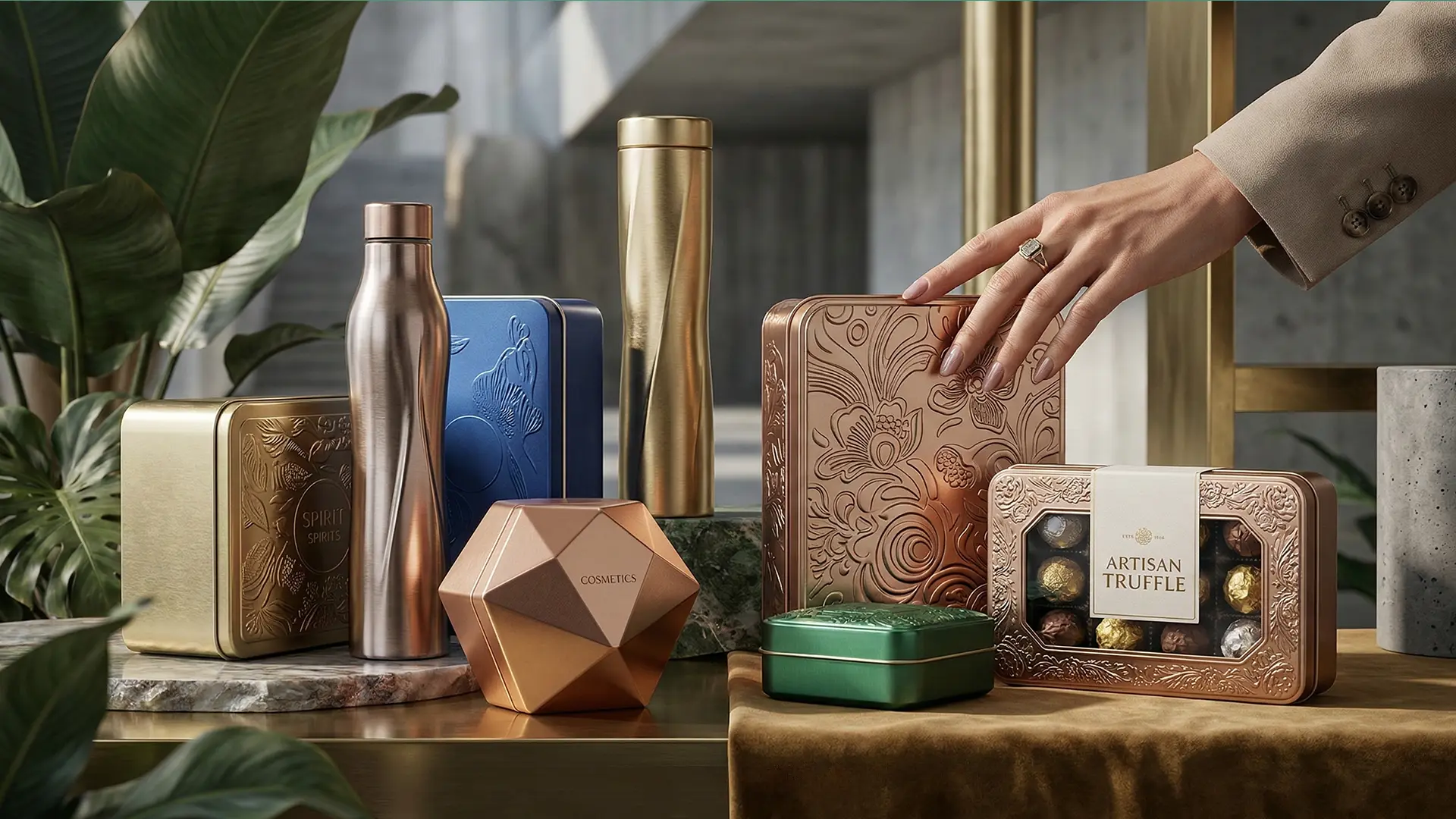
In 2026, monomaterial packaging — designs crafted from a single, recyclable material — is no longer a compromise. It is a statement. Brands like premium spirits producers and high-end cosmetics houses are commissioning bespoke metal tins, single-alloy zamak closures, and mono-glass bottles that are both exquisitely crafted and fully recyclable.
The European PPWR (Packaging and Packaging Waste Regulation) is accelerating this shift. Brands operating in the EU market must comply with new recycling targets, and forward-thinking companies are turning regulatory requirements into design opportunities. The result is packaging that whispers sustainability while shouting luxury.
What this means for your brand: If your packaging uses mixed materials — plastic inserts inside metal tins, or laminated cardboard with foil barriers — now is the time to explore monomaterial alternatives before regulatory deadlines force the issue.
2. Tactile Storytelling: The Return of Touch
In a world dominated by digital screens, physical touch has become a luxury in itself. The most innovative packaging designs of 2026 are engineered specifically for the fingertips.
Deep embossing, laser-etched textures, velvet-touch coatings, and precision-stamped reliefs are no longer decorative afterthoughts. They are the primary communication channel between brand and consumer. When a customer picks up a beautifully embossed metal tin, they experience the brand’s story before they even open it.
At NASS Studio, we have observed that tactile packaging significantly extends the time a consumer spends with a product before purchase — and dramatically increases the likelihood of keeping the packaging long after the product is gone. This is the essence of collectible packaging design.
Key materials leading this trend: Brushed aluminium with raised relief, lacquered metal with selective matte/gloss contrasts, and leatherette-wrapped rigid boxes with debossed logos.
3. Collector’s Edition Architecture: Packaging as an Object
The boundary between packaging and object d’art is dissolving. In 2026, the most talked-about luxury launches treat the package as a permanent possession — not a container to be discarded.
Limited edition collector’s tins for spirits, perfumery, and gourmet food are being designed with afterlife in mind. A whisky tin that becomes a storage box. A chocolate case that transforms into a jewellery holder. A perfume bottle carrier that doubles as a display stand.
This approach serves a powerful dual purpose: it justifies a higher price point while turning every customer into a long-term brand ambassador. The packaging continues its marketing work for years after purchase, visible on shelves, dressing tables, and desks around the world.
Design principle: When designing collector’s edition packaging, ask one question first — what will this be used for in five years? The answer should inform every structural and aesthetic decision.
4. Immersive Unboxing: Choreographed Discovery
The unboxing experience has evolved from a YouTube phenomenon to a core brand strategy. In 2026, leading luxury brands are investing as much in the internal architecture of their packaging as in its exterior appearance.
The sequence of discovery matters. A magnetic closure that opens with a satisfying resistance. An inner tray that glides out smoothly, revealing the product layer by layer. A hidden compartment with a personalised message. A tissue paper layer printed with a brand pattern that feels like unwrapping a gift even when you bought it for yourself.
This choreography is particularly powerful in e-commerce, where the unboxing moment is the only physical brand touchpoint in an otherwise digital purchase journey. For premium brands selling online, the unboxing experience is the flagship store.
Structural elements defining this trend: Magnetic rigid boxes with silk-ribbon pulls, nested tray systems in metal and wood combinations, and hidden interior print surfaces that surprise on first open.
5. Purposeful Minimalism: The Confidence of Less
After years of maximalist decoration — heavy embellishment, complex colour palettes, layered finishes — the most sophisticated luxury packaging in 2026 is moving toward radical restraint.
This is not minimalism born of budget constraints. It is minimalism born of confidence. A single embossed logo on a matte black metal tin. A clear glass bottle with a single typographic label. A rigid box in one colour with no imagery — only exquisite material quality and perfect proportions.
This approach demands extraordinary attention to detail. When there is nothing to hide behind, every surface, every edge, every join must be flawless. The craft becomes the statement.
Brands adopting this direction are signalling a new kind of luxury — one that trusts the consumer’s intelligence and rewards close attention. In a world of visual noise, silence is the loudest luxury of all.
Materials that define this trend: Anodised aluminium, frosted glass, uncoated natural papers with blind emboss, and natural wood with no surface treatment beyond a gentle oil finish.
Looking Ahead: What Unites These Trends
At first glance, these five trends appear diverse. Sustainable materials and collector’s editions. Tactile richness and radical minimalism. But they share a single underlying principle: intentionality.
The luxury packaging landscape of 2026 is not tolerating accidents. Every material choice, every texture, every structural decision must serve the brand narrative. Consumers who invest in premium products are increasingly sophisticated — they can sense when packaging has been designed with purpose and when it has been assembled from defaults.
At NASS Studio, this is the standard we apply to every project. We believe that exceptional products deserve packaging that is designed with the same rigour, creativity, and ambition as the product itself.
Ready to Elevate Your Packaging?
If you are developing a new product launch or refreshing an existing line, we would love to discuss how these trends can be applied to your specific brand and market.
Get in touch with NASS Studio — we are open to new projects and always excited to start a conversation.
NASS Studio is a premium packaging design studio based in Zielona Góra, Poland. We specialise in luxury structural packaging for spirits, cosmetics, perfumery, jewellery, and gourmet food brands worldwide.